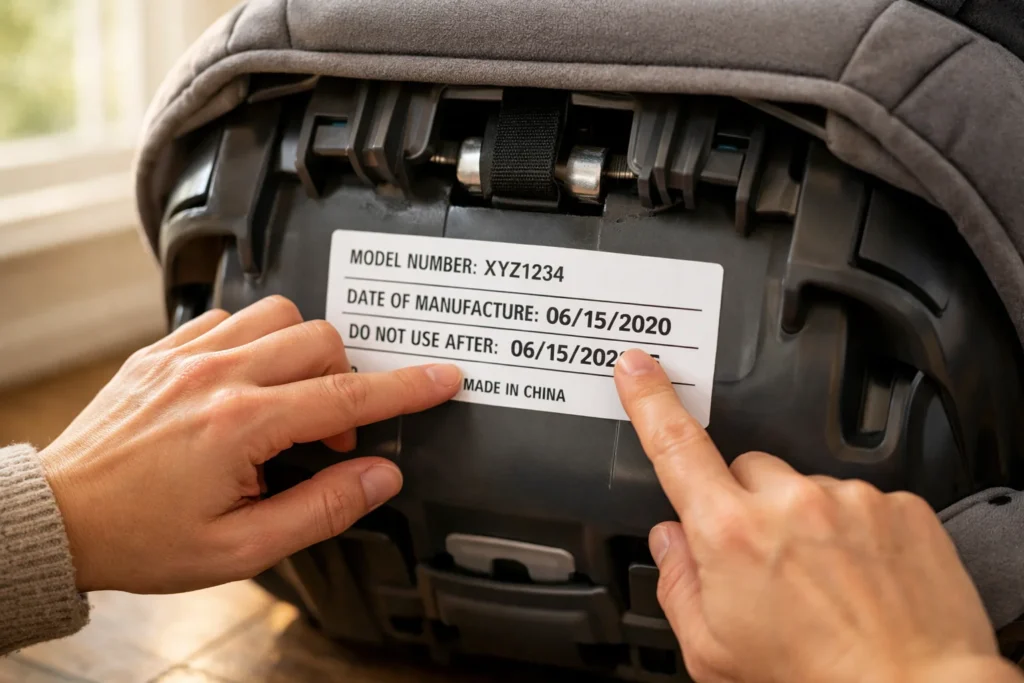

You’ve likely invested in a high-quality car seat for your child. It still looks solid, the straps work fine, and it seems like a perfectly good seat. So why does that small sticker on the back say it expires in a few years, or maybe already has?
Here’s what most parents don’t realize: car seat expiration is actually a real safety issue, not just a marketing ploy. Unlike milk in your fridge, car seats don’t visibly go bad. But the materials inside them do degrade, safety standards change, and technology advances. Understanding when your car seat expires and why that matters could directly impact your child’s safety on the road.
I’ll walk you through everything you need to know about car seat expiration dates, where to find yours, and what you should do when that date arrives.
Do Car Seats Actually Expire?
Yes, they do. And this is one of those parenting facts that initially sounds strange but makes perfect sense once you understand the reasoning.
Think of it this way: car seats are safety equipment. They’re designed to protect children during car crashes by absorbing impact forces. Just like bicycle helmets, football helmets, and other protective gear, car seats have a limited useful life after which manufacturers can’t guarantee their performance.
The National Highway Traffic Safety Administration (NHTSA) confirms that car seats do have defined lifespans similar to other safety gear across multiple industries. The key difference is that unlike a helmet you wear once and retire, a car seat experiences constant environmental stress year after year.
Your child sits in that seat hundreds of times. The seat bakes in summer heat reaching 120+ degrees inside your car. It freezes in winter. It gets exposed to sun, humidity, spilled juice, baby spit-up, cleaning products, and the general wear and tear of daily family life.
How Long Are Car Seats Good For?
Here’s the answer parents want: most car seats are good for 6 to 10 years from their manufacture date.
But there’s an important detail: this is counted from when the seat was manufactured, not when you purchased it. A car seat could sit on a store shelf for 6 months or longer before you bought it. That’s already part of its lifespan clock.
The exact timeline varies by manufacturer and car seat type:
- Infant-only carriers: Usually 6 years
- Convertible car seats: Typically 7 to 10 years
- All-in-one seats: Often 10 years
- Booster seats: Generally 6 to 10 years
Some brands like Maxi-Cosi offer longer lifespans (up to 12 years for certain models), while others like Doona set it at 6 years. The key is checking your specific car seat manual or the manufacturer’s website.
According to SafeRide 4 Kids, NHTSA notes that manufacturers set expiration dates to provide guidance on the expected useful life of each car seat model.
Why Do Car Seats Expire? Five Critical Reasons
Understanding why car seats expire helps you take this seriously. It’s not arbitrary.
1. Material Degradation Over Time
Car seats are constructed from plastic shells, foam padding, fabric, metal components, and webbing. None of these materials are designed to last forever, especially under the conditions they face.
The plastic shell becomes brittle from UV exposure and temperature extremes. Foam that absorbs crash impact compresses and breaks down. Harness webbing frays, weakens, and can stretch. Metal buckles, adjusters, and connectors corrode in unseen areas or accumulate debris that affects their function.
Here’s the critical part: these changes often aren’t visible to the naked eye. Your seat might look perfectly fine while its internal structure is compromised.
2. Environmental Stress and Contamination
Every time your car sits in the sun with doors closed, temperatures inside can exceed 120 degrees. This thermal cycling (heating and cooling repeatedly) takes a toll on materials. Cold winters add additional stress through contraction.
Beyond temperature, that seat endures constant exposure to:
- Food and drinks (juice, milk, formula)
- Baby waste (spit-up, diaper contents)
- Cleaning products and disinfectants
- Sunlight and UV radiation
- Moisture and humidity
These contaminants break down the material effectiveness over time in ways that aren’t obvious.
3. Normal Wear and Tear
Your child buckles and unbuckles that harness thousands of times. The seat gets repeatedly installed, adjusted, moved between vehicles, and reclined. Small parts disappear (that one buckle cover, a strap adjustment piece, a clip).
Each of these events slightly compromises the seat’s structural integrity and effectiveness.
4. Evolving Safety Standards and Technology
Car seat safety isn’t static. Research into child passenger protection continuously advances. Safety regulations get updated. New testing methods emerge that reveal better ways to protect children.
A car seat that met safety standards 8 years ago might not meet today’s standards. Newer seats have improved side-impact protection, better harness systems, improved energy absorption, and other technological advances that older seats simply don’t have.
According to Chicco, the NHTSA and other regulatory bodies regularly update car seat safety recommendations as new technology and industry advances emerge.
5. Preventing Unsafe Secondhand Use
Manufacturers include expiration dates partly to discourage people from buying used car seats without knowing their history. A secondhand car seat might have been in an accident, might have missing parts, or might be near its expiration date already. The expiration date signals “this should be retired,” reducing the risk of someone unknowingly buying a compromised seat.
Where to Find Your Car Seat’s Expiration Date
This information is intentionally visible on your car seat, though you might need to look a bit.
Most commonly, you’ll find the manufacture date on a white sticker or label. This sticker appears in different locations depending on the brand:
- Back of the plastic shell (most common)
- Bottom of the car seat base
- Under the seat cover (you may need to lift padding slightly)
- Inside the instruction manual
- On the product registration card
The label usually shows:
- Model number
- Serial number
- Date of Manufacture (DOM)
- Useful life statement or exact expiration date
If the expiration date is explicitly printed, great. If you only see the manufacture date, add the “useful life” years from your manual to calculate when it expires.
Pro tip: Once you find your expiration date, write it on a piece of tape and stick it on the outside of your seat base. Take a phone photo of the label as backup. You won’t want to disassemble your perfectly installed seat three years from now just to find this information.
Is It Illegal to Use an Expired Car Seat?
This is where it gets complicated.
According to SafeRide 4 Kids, there is no federal law explicitly prohibiting the use of expired car seats. However, many states have “proper use” laws requiring that car seats be used according to manufacturer’s instructions. Since manufacturers specify expiration dates, using a seat beyond that date technically violates these state laws.
The practical answer: while you might not face legal consequences in many places, you’re exposing your child to documented safety risks. Insurance companies might also question an expired seat in accident situations.
The safer answer is simpler: just replace it.
What to Do With an Expired Car Seat
Once your car seat reaches its expiration date, it’s time to retire it. Don’t donate it, don’t sell it, and don’t pass it to a friend.
Here’s how to properly dispose of an expired car seat:
- Remove and discard the padding and foam
- Cut or remove the harness straps (this prevents anyone from using them)
- Write “DO NOT USE – EXPIRED” in permanent marker on the plastic shell frame
- Remove any identifying labels (serial number, manufacture date)
- Wrap it in a black garbage bag before disposal
The goal is making it impossible for someone else to unknowingly use it.
Some communities have car seat recycling programs or disposal centers. Check with your local waste management. Some retailers like Target run periodic car seat trade-in events offering discounts on new purchases. Several national car seat recycling programs exist that will accept your expired seat by mail.
When Else Should You Replace Your Car Seat (Beyond Expiration)?
Expiration isn’t the only reason to retire a car seat.
After a moderate or severe crash: The NHTSA recommends replacing car seats that have been involved in moderate or severe crashes, as internal damage may not be visible despite the seat looking fine.
Minor crashes don’t automatically require replacement if all these conditions are true:
- The vehicle was drivable afterward
- No damage to the door nearest the car seat
- No passengers were injured
- Air bags didn’t deploy
- No visible damage to the seat
When your child outgrows it: Check your seat’s height and weight limits. Once your child reaches either limit, they need the next size seat.
If it’s been recalled: Register your car seat with the manufacturer. They’ll notify you of any recalls. Check the NHTSA website regularly for recall notices.
If parts are missing or damaged: A missing harness clip, broken buckle, or torn cover means it’s time to replace it.
Should You Buy a Used Car Seat?
This is where expiration dates play a major role in a bigger safety decision.
Buying secondhand isn’t recommended for one simple reason: you don’t know the complete history. That seat might have been in an accident (which voids its safety), might have missing parts, might already be expired or close to expiration, or might have damage you can’t see.
If you do consider secondhand, verify:
- The expiration date (and that it has several years remaining)
- The complete history (no accidents, no recalls)
- All original parts and padding are present
- No visible damage or missing components
Better yet, watch for manufacturer trade-in programs or sales. Many retailers offer trade-in discounts, making new seats more affordable.
Frequently Asked Questions
Q: Can I extend my car seat’s expiration date?
No. Manufacturers set these dates based on rigorous testing. The date can’t be extended or negotiated. Once it expires, it’s done.
Q: Does the expiration date count from when I purchased it or when it?
From the manufacture date only. A seat made in January 2020 expires in January 2026 (for a 6-year seat), regardless of when you bought it.
Q: What if I can’t find my car seat’s expiration date?
Contact the manufacturer directly with your model number. The NHTSA website has contact information for all major car seat brands.
Q: Do car seat bases expire, too?
Yes. Infant-only car seat bases typically expire after 6 years. Check your base’s label for its specific timeline.
Q: Do booster seats expire?
Yes, booster seats follow the same expiration rules as full car seats, typically lasting 6 to 10 years.
Q: Is my car seat safe if it’s never been used?
Even unused seats expire. Material degradation happens regardless of use. An unused car seat from 2016 is equally expired today as one that’s been used daily.
Q: Can I use an expired seat occasionally (like for road trips only)?
No. Occasional use doesn’t make expired seats safe. The material degradation and outdated safety standards apply regardless of frequency.
The Bottom Line
Your child’s safety is worth the investment in a current, non-expired car seat. Car seat expiration dates aren’t a money grab by manufacturers. They’re based on genuine material science, safety testing, and evolving child protection standards.
Check your car seat’s manufacture date today. Write down when it expires. Set a phone reminder 6 months before that date so you have time to budget for and select a new seat. Register your seat with the manufacturer to stay informed about recalls.
When that expiration date arrives, retire the old seat properly and upgrade to a newer model with the latest safety features. Your child’s protection depends on it.